I’d like to meet…

Introduction

This is my first post in participating in Amy Johnson Crow’s 52 Ancestors in 52 Weeks a set of 52 prompts to write about your family history. I’m not sure I will make posts for all 52 weeks, but I will shoot for at least monthly. This post will serve to fulfill two of the prompts weeks 1) “I’d like to meet…” and 3) “Out of place”. 

Meet Norman B Hyde

Norman Hyde is my great-grandfather. I’d like to meet him to see if he could break one of my biggest brick walls: Who is his maternal grand-father or my second great-grandfather? However, if he couldn’t do that, I’m sure he would be a fascinating person to talk with. I’ve found a wealth of information about him that will be summarized briefly.

I do have some doubts that he could provide information about his grand-father. He is probably either Samuel or John/Jonathan Latimer (guesstimate 1784-1817) and is rather mysterious. He died or disappeared when Norman’s mother, Francis Latimer (1807-1873) was about 10. His grandmother Jane McCutcheon (1788-1823) married second Daniel Shearer (1791-1874) in 1818. Their daughter Jane Maria Shearer (1819-1910) was an early member of the LDS faith and is quite well documented thus I’m quite sure of those relationships. I have several DNA matches with her descendants.

Norman’s Life

Norman was born 12 Dec 1844 in Groton, New York to Henry D Hyde (1085-1864) and Francis Latimer Hyde (1807-1873). He had three brothers and five sisters.

He served twice in the Civil War. The first term started 11 Oct 1861 as a Private in Company F, 76th New York Infantry. He was discharged 24 Sep 1862 at Washington, DC due to disability. He served with his brother Charles U Hyde (1827-1885) and his second cousin Charles A (1840-1863). Charles A died of injuries at Gettysburg. Note: Norman and Charles U were discharged due to disability before the Gettysburg battle. His second term was served beginning Feb 1864 as a Private in the New York 9th Heavy Artillery Regiment. He was discharged 6 May 1865 at McClellan General Hospital in Philadelphia.

Between his Civil War service he married Mary Augusta Sears. They had eight children between 1864 and 1884. The last was my grandmother, Mabel Augusta (1884-1963).

Post Civil War, Norman was an officer and/or member of several Grand Army of the Republic (GAR) Chapters.

Via several censuses and other records Norman had these occupations: Soldier, Blacksmith, Farmer and Teamster. He lived in several places in Tompkins County, NY and Potter and Tioga Counties, PA. In addition to the GAR, he was active in the Grange and local politics.

He died in Galeton, PA 8 Feb 1918 after being struck by a train.

Out of Place

The first real record of Norman I found was when he showed up in the Elisha Eldridge (1805-1867) household in the 1860 census. I was researching that family at the time and it made at least vague sense since I was aware that there were several marriages between the families. I thought perhaps they could have have been care takers. But when I started researching farther, he also showed up where is should have been. That was in his father, Henry D Hyde’s home. I should note that Elisha is my second great-grandfather.

Elisha’s home was counted 19 Jun, page 30

1860; Census Place: Groton, Tompkins, New York; Page: 30; Family History Library Film: 803868

Henry’s home was counted 13 Jun, page 4

1860; Census Place: Groton, Tompkins, New York; Page: 4; Family History Library Film: 803868

The Hyde and Eldridge farms were near each other, so I suspect Norman was visiting his sister, Ann who had married Palmer Eldridge.

source: https://freepages.rootsweb.com/~townofithaca/history/maps/1853/_P9D9543.jpg

Further out of Place

William Moe also appears to be “out of place” at the Eldridge home. There are two nearby Moe farms on the full version of the map above. Willam also appears in the home of Catherine Moe. Counted on June 16th.

1860; Census Place: Groton, Tompkins, New York; Page: 22; Family History Library Film: 803868

References

Seventy-Sixth Infantry Civil War Roster.
https://museum.dmna.ny.gov/application/files/6815/5240/1350/76th_Infantry_CW_Roster.pdf

Annual Report of the Adjunct-General of the State of New York for the Year 1897.
https://museum.dmna.ny.gov/application/files/4515/4834/3860/9thArtCW_Roster.pdf, page 197

Hyde genealogy, or, The descendants, in the female as well as in the male lines, from William Hyde, of Norwich
https://archive.org/details/hydegenealogyord02walw/page/1144/mode/1up

Railroad Accident Death 9 Feb 1918
https://www.newspapers.com/clip/88031288/railroad-accident-death/?xid=637

First Glass Show

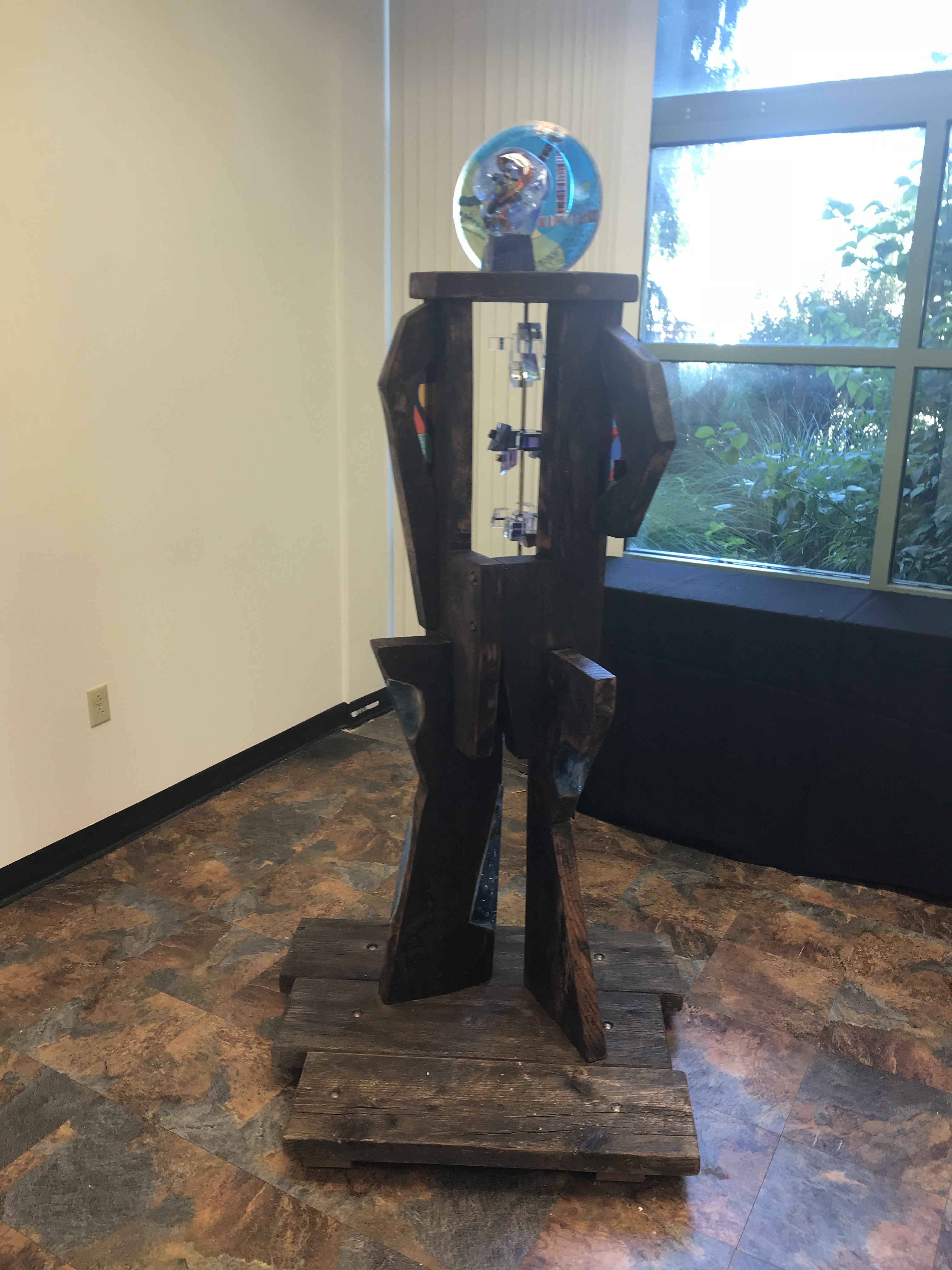
For July’s First Friday, I had my first glass showing. It was part of student show at the Banana Factory in Bethlehem, PA. Some details of it’s creation are in another post.

Me

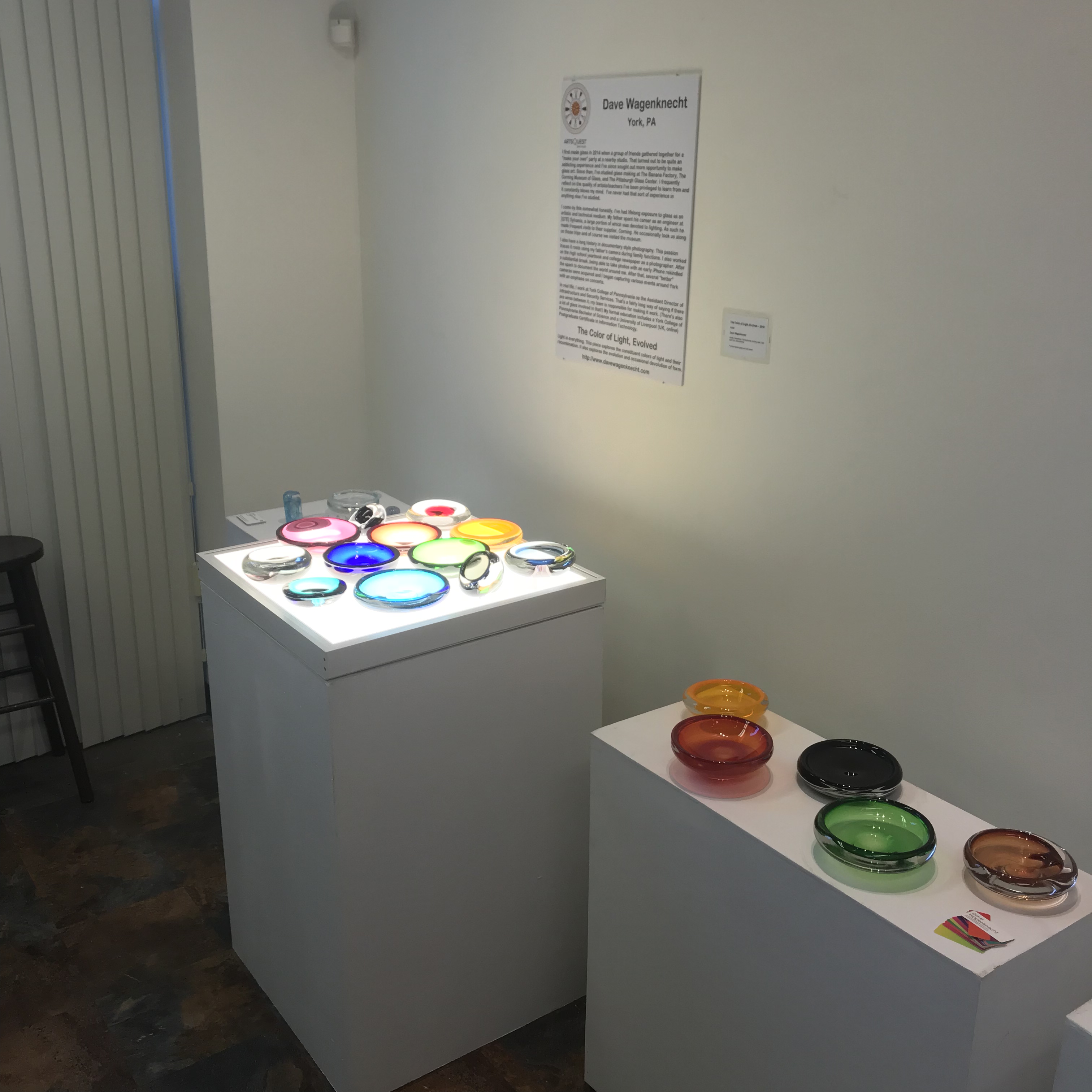
The grouping on the light table is the main piece. I also showed some individual bowls., including two that were created with home-made coloring.

Me-Detail3

It was a fantastic experience. The works were created in a class meant to create work for display. My fellow students Lee and April also created great work.

Lee

Lee Riley

April

April Vergara

The Color of Light – Evolved

Small Group

Background

The Color of Light – Evolved is a project meant for initial display at the Banana Factory in Bethlehem, Pennsylvania. It will be shown starting July 6th, 2018.

This work shows the evolution of design, process, and skill over the several months of its creation. The bowls are displayed on a custom mounted commercially available LED lighting panel.

Design

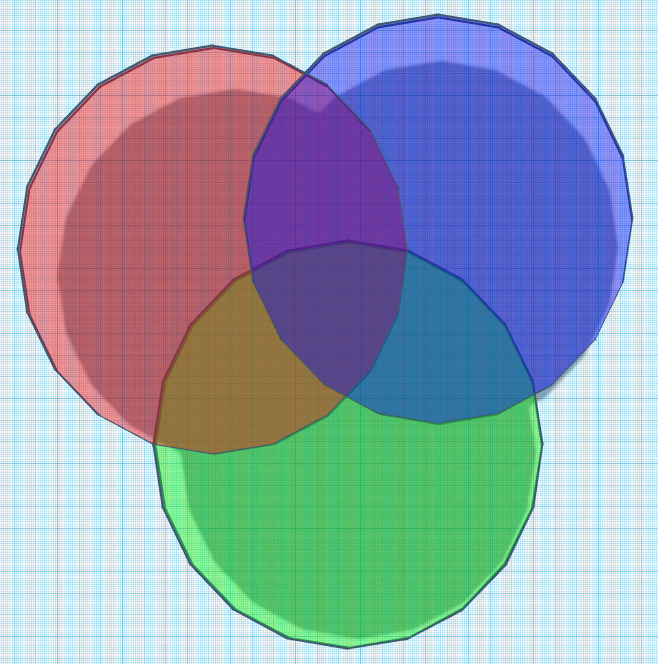
The original intent of this project was to have overlapping bowls to create a filter effect to show the combination of colors when lit from below.

Bowls-Concept-InsertSide view of concept

Color Overlap InsertTop view of color mixing – concept

By color theory, the colors would combine to produce the secondary colors. Blue plus green should create cyan, green plus red should create yellow, and red plus blue should create magenta. And all three should combine to produce white. (The software used to render this, misrenders this as an off grey. In retrospect, this should have been seen as an omen.) Note that these the colors are referenced to the framework of light not pigments.  

RGB_illumination

Colored light mixing – (By en:User:Bb3cxv [GFDL (http://www.gnu.org/copyleft/fdl.html) or CC-BY-SA-3.0 (http://creativecommons.org/licenses/by-sa/3.0/)%5D, via Wikimedia Commons)

In practice, the colors did not combine as expected. During a recent summer intensive class,  I’ve had the good fortune to consult with the Dr. Jane Cook, the Chief Scientist at the Corning Museum of Glass. She advised that the this should, of course, work. Her advice was to do more experimentation with various shades of the colors at various densities. This will be a future iteration of this project.

The final project creates the feeling of of the combined colors by featuring bowls in variants of the primary and secondary colors. It also shows the evolution and occasional devolution of techniques and tools used to create the bowls.

Process

The bowls in this project are based on a technique learned from Mark Matthews in his “Graphic and Color Systems in Glass” class. The bowls are made from several gathers of glass on a solid punty. Color is applied to the end and pressed into the gather with a stainless steel poker. After the color is applied, the gather is opened with a steam stick inserted into the channel where the color was pressed in. It is then expanded into the final form by the centrifugal force of spinning the punty in the reheating furnace and working with jacks. It is cracked off then annealed.

Photo May 18, 21 40 23A completed bowl on the punty

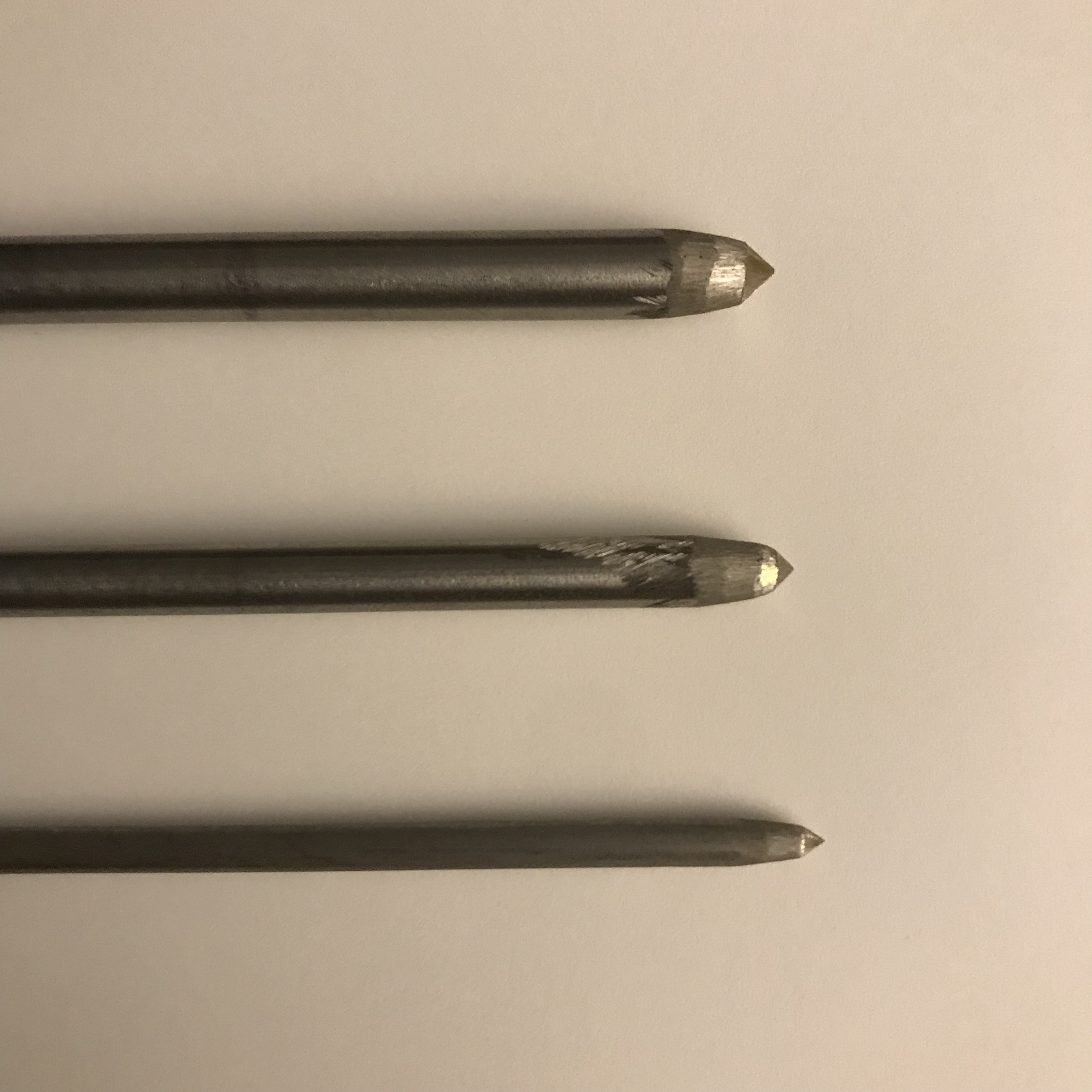
The stainless steel poker to apply the color and the steam stick were custom made for the purpose. The steam stick, like shaping blocks, is made of water-soaked cherry wood.

Color Poker and Steam Stick

photo-may-09-20-41-35.jpg

Color Application (lower) and Poking (upper) Visualization 

Creation

Portions of this project were created at the Banana Factory, The Studio at the Corning Museum of Glass, and my home in York, Pennsylvania.

Thanks

The following have inspired, influenced, or assisted with the project in some way. I’m grateful that they have shared their knowledge and skill.
Mark Matthews

Chad Balster

Mary Cash

Jane Cook

Dennis Gardner

April Vergara

Anna Riley

Tim Spurchise

Contact

Website: https://www.davewagenknecht.com

Email: dave@davewagenknecht.com

Steam Bowl Tools

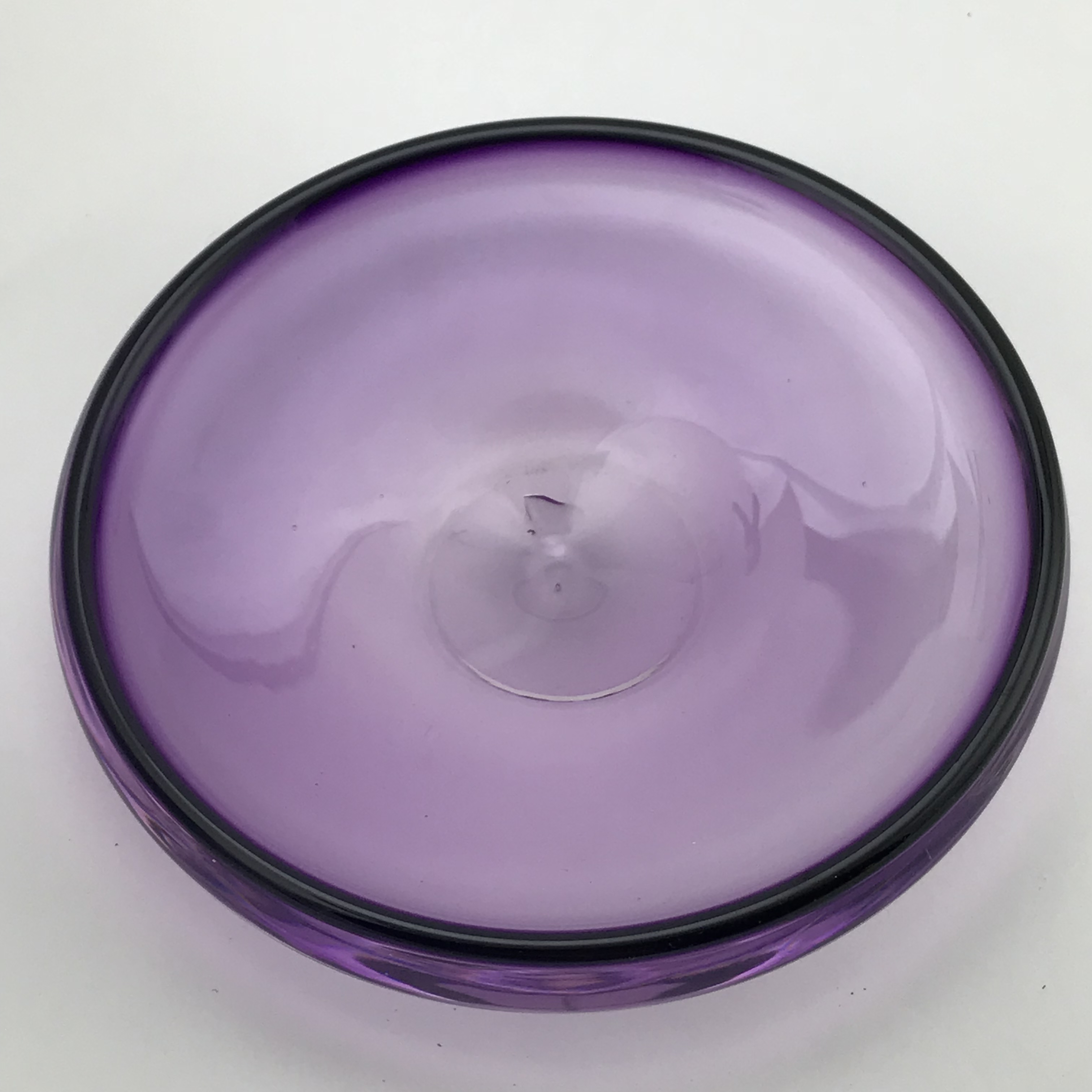
Photo Jun 27, 20 17 25Amethyst Steam Bowl (approximately 7″) 

In order to make bowls for a recent project, I needed to make some custom tools. Both the bowls and tools are based on a technique learned from Mark Matthews in his “Graphic and Color Systems in Glass” class. The bowls are made from several gathers of glass on a punty. Color is applied to the end and pressed into the gather with a stainless steel poker. After the color is applied, the gather is opened with a steam stick inserted into the channel where the color was pressed in. After steaming, the bowls are still bulbous. The are expanded into the final form by the combination of centrifugal force of spinning the punty in the reheating furnace and working them with jacks at the bench. 

Photo May 09, 20 41 35Color Application and “poking”

The bottom sketch shows the color applied to the gather. The upper sketch shows the color poked in to the gather.

The Tools

Photo Mar 14, 22 01 56Initial Pokers

The pokers were initially created with very sharp points. This caused several issues more of point in the center of the finished piece and more of a tendency to want to get stuck in the glass. Various sizes were tried. The largest proved most useful for this project.

Stainless Poker and detail

Mark’s poker is a bit more elegant in that is turned on a lathe and has shaped handle. However, mine is fully functional for my purposes. The pokers were created by grinding and sanding the taper on the end. The stainless steel when more smoothly formed, cool and used fairly quickly, does not stick to the glass.

Photo Jun 22, 21 21 12Steam Stick

The steam stick, like shaping blocks, is made of water-soaked cherry wood. The tip was created by sanding material away. When pressed into hot glass, the water flashes to steam and causes the void to expand.


Ribbon Machine Molds

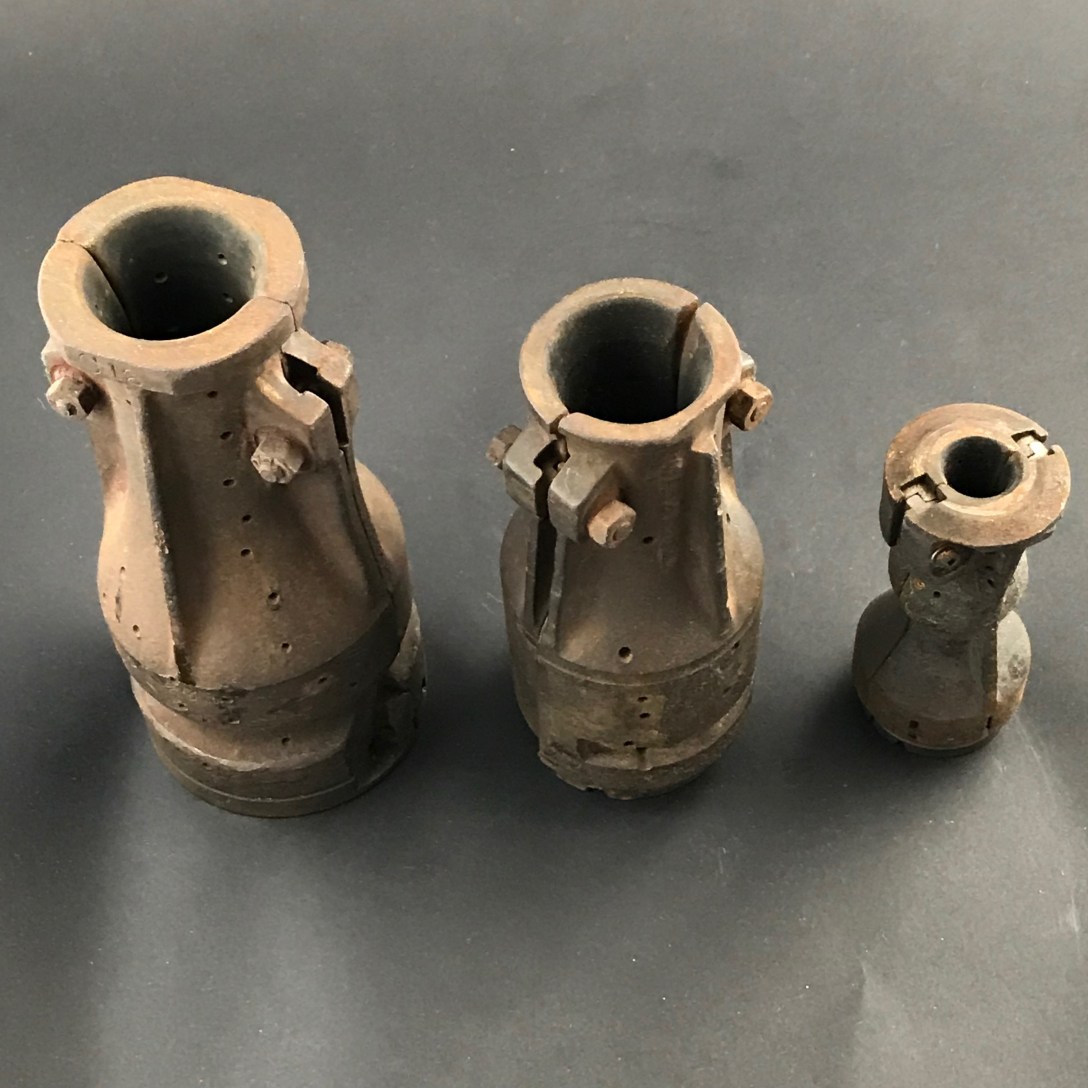
This will add some detail to the posting of the YouTube video about the ribbon machine. I’ve found these molds that were used to form items ribbon machine. The machine was used to make a variety of items: light bulbs, tubes, and Christmas decorations among them.

IMG_3184

These are pretty standard light bulbs. On the left is a larger bulb like a 3-way or higher wattage lamp. The center is the most typical A-19 bulb. On the right is a Christmas or indicator lamp.

IMG_3186

The molds shown open. As the machine ran, a glob of glass would be dropped into open molds. They would be close and the glass inflated to from the bulb. Once formed they would open and the finished object would be removed.

Glass Ribbon Machine

My father spent a large potion of his career in the lighting industry. This was, of course, old school incandescent lamps. He was more focused on the metal parts, especially bases, of the lamps. But he worked closely with the people who would have run these machines.

The Corning Museum of Glass has more detail about these machines on their blog. They are currently storing the machine.